Types of Automated Boring Machines
Automated boring machines are operated and powered by motors and machinery. In addition to type, industrial buyers should consider the application, precision, power, cost, and time requirements for the job.
- Precision Boring
- Jig Boring
- Lathe Boring
- Vertical Boring
- Horizontal Boring
Precision Boring
A single-point cutting operation is precision boring. In order to create a precise interior cylindrical surface, the work piece expands an existing opening while moving parallel to the cutting tool’s axis of rotation. By moving the work piece into a revolving single-point, precision boring can also be utilized to straighten and widen existing holes. Small chunks of the substance are removed.
Jig Boring
Jig Boring enlarges an existing aperture in a work piece to create a precise internal cylindrical surface. The single-edge cutter is rotated inside a still work item while being advanced parallel to the axis. The machine has a spindle housing, column, and bade precision work table. For placement, the spindle and work table are both quite accurate. Jig boring machines use single-point tool bits for small holes and strong, solid boring bars for big holes.
Lathe Boring
Conical and cylindrical surfaces are produced using a lathe. Moving perpendicular to the axis of rotation allows the single-point cutting tool to widen an already present hole in a work component. The cutting tool moves at an angle to the axis of rotation in order to create a taper on the work piece. When a boring bar with an insert attached to the tip is fed into an existing hole, the work piece is rotated while being held in a chuck.
Vertical Boring
By widening an existing aperture, vertical boring is utilized to create a precise internal cylindrical or conical surface. As the single-point cutting operation is supplied into the work, the huge work pieces rotate about a vertical axis. To regulate the cut’s depth and diameter, the tool moves both vertically and horizontally. The axis of rotation of the work piece and the borehole are always in perfect alignment.
Horizontal Boring
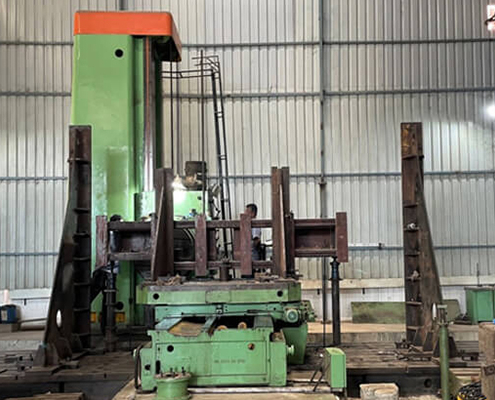
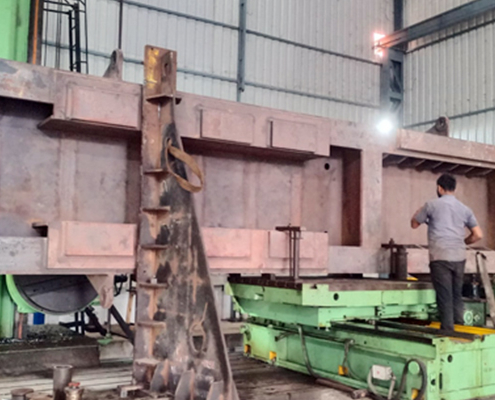
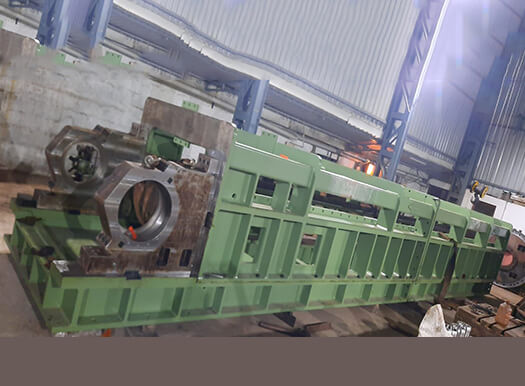
- Horizontal Boring enlarges an existing aperture in a work item using a single-point cutting tool to provide an exact internal cylindrical surface. Tool motion on the machine is perpendicular to the axis of rotation. One or more spinning single-point cutters are advanced horizontally into a medium to a large stationary work item to cut holes. As the work piece is advanced, material chips develop, and helical internal feed marks are left behind.
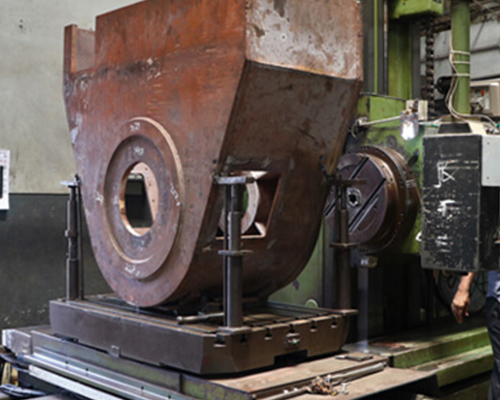
- The versatility of horizontal boring machines allows for faster setup times when changing applications. They can be used for milling, drilling, reaming, and tapping. They have a rotating worktable that may feed in three different directions with respect to the spindle axis and are made for heavier work components.


 https://www.jkeng.in/wp-content/uploads/2022/07/Big-Size-Boring-Machine-in-Chennai.jpg
400
500
jkeng_login
https://www.jkeng.in/wp-content/uploads/2022/07/Jkengg-Logo.png
jkeng_login2022-07-29 10:58:302022-07-29 11:01:46Big Size Boring Machine in Chennai
https://www.jkeng.in/wp-content/uploads/2022/07/Big-Size-Boring-Machine-in-Chennai.jpg
400
500
jkeng_login
https://www.jkeng.in/wp-content/uploads/2022/07/Jkengg-Logo.png
jkeng_login2022-07-29 10:58:302022-07-29 11:01:46Big Size Boring Machine in Chennai